
From the Mill to the Markets: The Summer I left the Blue-Collar World
…and how I predicted the Great Recession

Note: This is an excerpt from the first draft of Millrat,* reconfigured into a short essay.*
I was 21, running credit reports on guys buying motorcycles they couldn’t afford. Two years before Lehman collapsed, I could already feel the whole thing was rotten. I just didn’t have a word for it yet — until I did: moral hazard.
Twenty years ago. For many people, turning 21 is just another step toward full adulthood — the year you can finally order a drink at a bar. For me, 2006 was a year of transition, both personal and professional. More than that, it was my permanent pivot from the blue-collar to the white-collar world, an uprooting from everything I’d been raised in. What I didn’t realize at the time was that the three jobs I worked that summer were giving me a front-row seat to the financial crisis that would define the next decade.
The Blue-Collar Vocational Student
After transferring to Valparaiso University in the fall of 2004, I had a lot of making up to do. I’d left Purdue with a GPA of around 1.0 after my Dad passed away from amyotrophic lateral sclerosis (ALS). With no parental support after that, I also had to provide for myself, so I held down two jobs for my entire time in undergrad. That created a constant tension in everything I was trying to do.
A college roommate recommended a book that explained exactly why I was in school: Beer and Circus: How Big-Time College Sports Is Crippling Undergraduate Education (2000), by former Indiana University professor Murray Sperber. It explores how large universities use sports, tailgating, and the campus party scene to keep students entertained and distracted while quietly diluting undergraduate academic standards.
Sperber lays out four student subtypes: the collegiate, the academic, the vocational, and the rebel. I fell squarely into the vocational group. Sure, I usually had an overpriced craft beer in my hand, but I didn’t party. My peers knew everything about politics; I was clueless. Even my childhood obsession with sports had faded into the sunset. To me, college was nothing more than a ticket to the middle class. A career, or any kind of long-term professional goal, never crossed my mind.
With a 5 a.m. workout schedule and one of my jobs nearly 45 minutes away, there was little margin for error. When I received a D+ in calculus — a class I should have pulled at least a B in — it was clear I was never going to put in the effort or maintain the discipline required to become an electrical engineer, something I’d wanted since my freshman year of high school. Before that, I wanted to be an electrician, one of the few trades that demanded a strong hand and mind in equal measure.
I didn’t know what I wanted to switch my major to. But the summer before, I’d bought a computer off Craigslist from a kid in the area. He was wealthy — his dad collected royalties from some motor patent he’d licensed — and he was heading to college that fall to study finance. Since a finance degree still had math at its base, that’s where I decided to pivot.
The Engineer
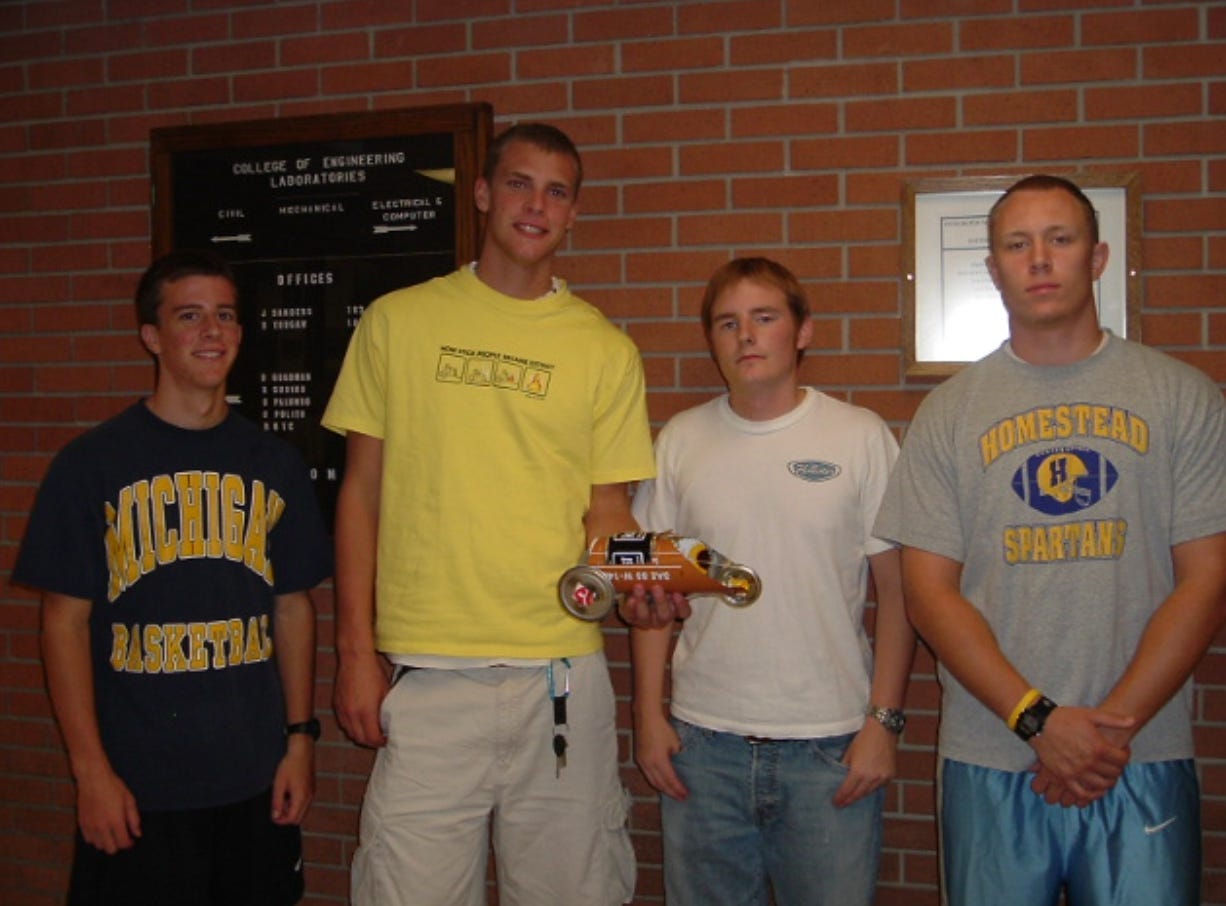
The hardest part of the transition was telling my boss and mentor, the late Collis C. Hooks. He was disappointed I was leaving engineering, but he stayed supportive. In many ways, he was one of the men who stepped in after my Dad passed. Mr. Hooks was a licensed Professional Engineer (P.E.), and he taught me the skills of a civil, electrical, and mechanical engineer through sheer seat time and hands-on experience.
The other thing I had to reckon with was the scholarship. I’d won a full ride on the strength of an essay about why I wanted to be an engineer: to help the steel mills of Northwest Indiana innovate and stay competitive. Dad always said, “All a man has is his word” — and part of keeping your word was backing it with action. Walking away from engineering felt, in some ways, like betraying the values he raised me with, and the institution that had bet on me.
The Electrician
Shortly after I transferred to Valparaiso in the fall of 2004, the engineering school mentioned that a local company was looking for part-time help. It turned out to be the same firm a family member worked at, and once I applied, she vouched for me. What actually got me hired was that I could read “prints” — the drafting renderings and computer-aided designs behind every part.
The company was Emerson Power Transmission (EPT), and it had acquired several bearing manufacturers. My job was to scan in the prints so the company could find duplicate products sharing the same SKU, which would then be consolidated and streamlined.
Just months in, they moved me down to the basement to assist a technician who ran all the bearing tests. It’s the only job I’ve ever had where I wore a tie and got my hands dirty at the same time.
Over time, I pieced together the company’s history from the people who’d lived it. This important, family-owned business — founded in 1905 and known as McGill’s — was taken over in 1990 in a corporate hostile takeover. I heard story after story about how good the family had been to work for, how they took care of their people. After the now-publicly traded company moved its headquarters to a faraway land of Ithaca, New York, all that mattered was money and the bottom line. Employees became numbers on a spreadsheet.
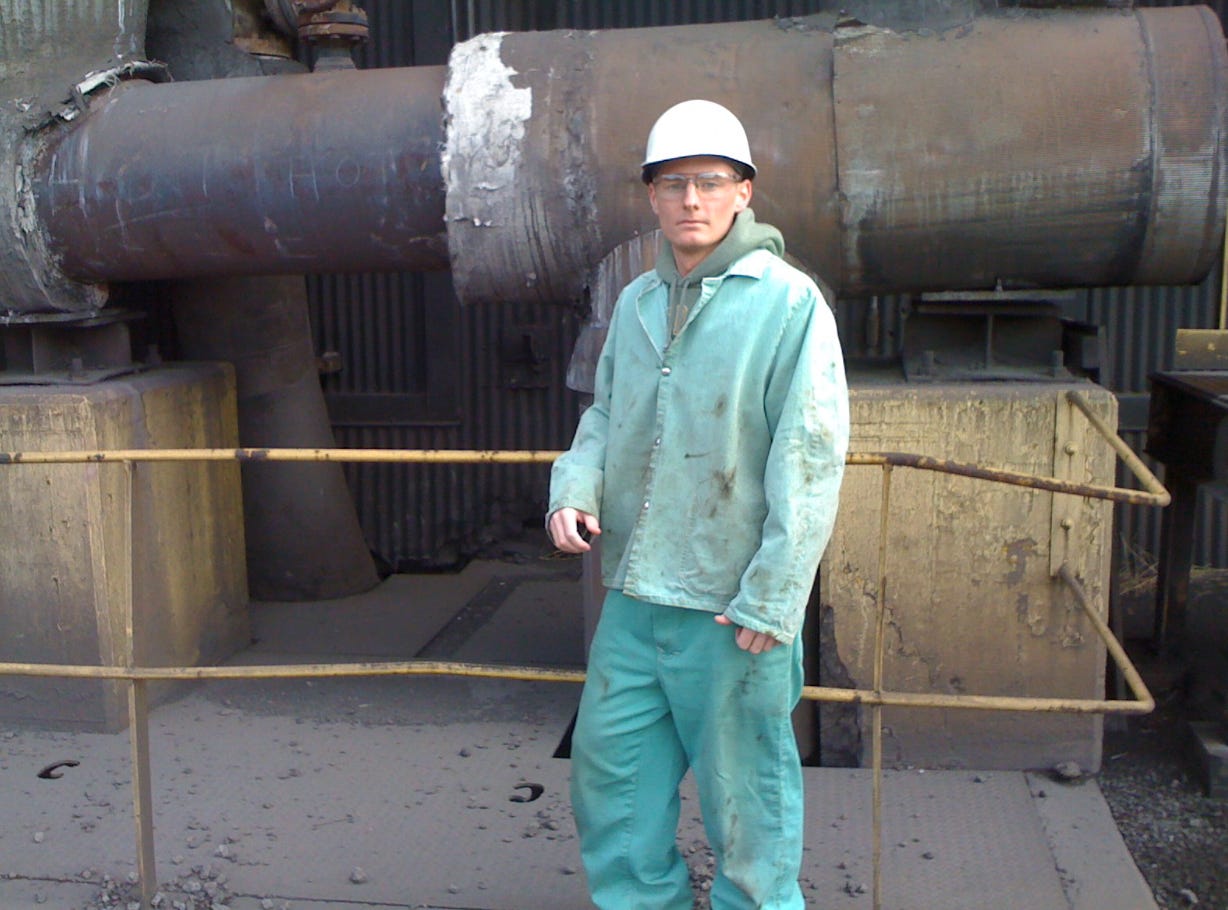
Either way, I kept my head down and did what needed doing that summer, splitting my time between this job and the one servicing the steel mill. The bearing tests were fascinating, and the most fun was blowing up bearings for the military. They wanted a bearing that could run at 40,000 rpm with no oil — simulating a helicopter that had just been shot. Developed for Sikorsky and Lockheed, they were destined for the Apache Block III, V-22 Osprey, F-35, AH-1 Cobra, CH-53E, A-10 Thunderbolt/Warthog, and Black Hawk.
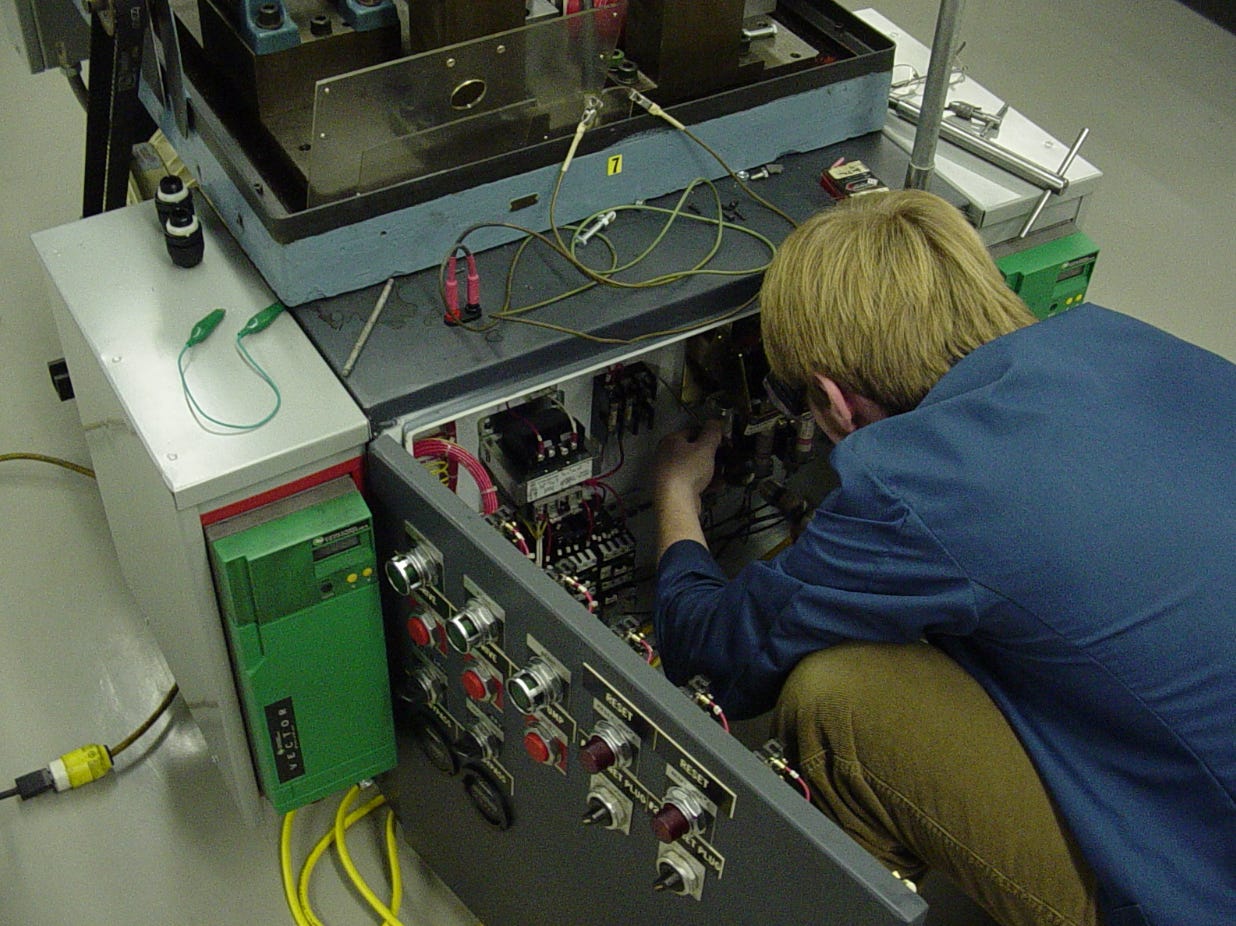
Without letting the local union know, I eventually started doing electrical work and built a few bearing test machines under my colleague’s supervision. My childhood interest in RC cars had given me a strong command of direct current (DC), but this was my first time working with alternating current (AC), and I loved it. It’s almost too on-the-nose: I loved the work of an electrician, and I’d already given up the major. The company really wanted an engineering student in this part-time role, so I moved on by the fall of ‘06. All through college, I carried this nagging sense that people who use their hands to make a living are valued less than those who use their minds.
Separate from the bearing test lab and the white-collar offices above it, on the other side of town, was where the bearings were actually made. Years after I left, EPT sold the company to Regal Beloit in 2015, and a union strike followed in 2019. Two years after that, the plant’s manufacturing was consolidated to a non-union shop 60 miles south, and the white-collar workers were absorbed down in Kentucky. What was once the largest employer in the area — 1,500 people — is now an obituary, what locals call a second deindustrialization, the same people who’d already watched the job losses of the ‘80s.
The Financier
By now I was in the university’s business school, and it helped us line up internships. My first was at one of the oldest family-owned motorcycle franchises in the country. During the week, I split my time between the other two jobs; Saturdays were reserved for my future. Those days were brutal with customer traffic, because motorcycle sales were illegal on Sundays — a state blue law that wouldn’t change until 2012.
My main job was to work the phones, calling local banks and credit unions to see if they’d finance a purchase. The margins on scooters, motorcycles, and four-wheelers aren’t great, so once we secured a local financing agreement, we’d mark up the loan a point or two to pad the bottom line. The only other way to make real money was to sell a service package, warranty, or theft protection.
The second part of my job was running credit reports on buyers, which determined whether they qualified and at what interest rate. It didn’t take me long to catch on — and it was the first time I ever felt “moral hazard“ in a job. Moral hazard is what happens when the person taking the risk isn’t the one who pays if it goes bad. We booked the sale and the markup today; whether the buyer could actually carry the loan was someone else’s problem tomorrow. Motorcycles are considered luxury loans, because nobody needs one; if a buyer starts missing payments, this is the first bill they drop. So the interest rates ran higher by default. But the economy was flying, and we handed loans out like hotcakes.
Plenty of buyers came through already leveraged to the hilt — a house, a car, sometimes medical debt — and somehow we’d still write them a loan. I remember one guy whose credit was so bad he ended up with a 22% simple-interest loan on an $11,000 crotch rocket (an RR-1000), when the going rate was closer to 8%. Loan terms ran six years back then, so he was essentially paying double.
Time and again, I heard the same question from buyers: “What’s my monthly payment?” That’s all they cared about. Never the total cost, never the interest they’d pay over the life of the loan. That’s when I learned the industry was stretching loan terms from five years to six. It sounds minor, but the move is quietly predatory: a longer term shrinks the monthly payment enough to get a lower-credit buyer to say yes, while raising the total interest they’ll hand over before it’s done. Cheaper each month, more expensive by a mile. A credit report doesn’t tell you everything about a person’s finances, but I could see plainly that a single bad break would send these people to the poorhouse.
The last thing I learned before leaving that internship was where all this paper went. Honda Financial Services would package these loans, sell them into a specialized trust, and ship them off to Wall Street. There, thousands of risky loans like them were bundled together, sliced by risk into layers called “tranches,” and sold to investors who assumed the math protected them — the same machinery, in miniature, that was about to blow up the mortgage market. These were asset-backed securities (ABS). Even though my gut told me we were putting too many loans out the door, it wasn’t my job to tell people what they could or couldn’t buy. College had taught me to trust the markets — that whatever bad loans were out there would be priced in by investors, and the market would correct itself.

A Pivot to Politics
I got straight A’s in my finance classes senior year, and I still didn’t really understand ABS, let alone collateralized debt obligations (CDOs) or mortgage-backed securities (MBS). The following spring, in ‘07, I interned at Merrill Lynch as a financial services intern. One junior employee joked that if the CEO ever blew up the entire company, he’d still walk away with an enormous golden parachute — tens of millions, no matter the wreckage left behind. At the time, it sounded like ordinary office cynicism, the kind of thing you laugh at and forget. But that October, when the news broke about Merrill’s financial condition and its CDO/MBS positions, that offhand joke stopped being a joke. The moral hazard I’d felt on the motorcycle sales floor a year earlier wasn’t a hunch anymore. It was the business model.
That fall, applying to jobs online became a thing. Yet for the five to ten applications I fired off every single day, I almost never heard back. I graduated with a finance degree in December 2007 — the very start of the Great Recession, though the National Bureau of Economic Research wouldn’t officially date it there until exactly a year later, a month after Barack Obama was elected president.
Having studied these instruments, and having steeped myself in the nature of risk and randomness in nature, I grew frustrated — and I’ll admit this is where my read gets more contested. Plenty of people blame corporate greed, and they’re not wrong. But I put real weight on the policy side too: laws and regulatory mandates that pushed money toward riskier borrowers, in part through government-sponsored enterprises (GSEs) like Fannie Mae and Freddie Mac. Economists still argue about how much of the blame belongs there versus private-label Wall Street securitization, and honest people land in different places. What I saw from the sales floor was simpler: when the incentives all point toward “yes,” the private sector responds to the incentives in front of it. With no good job prospects, I went back to graduate school in January 2009 for a degree in International Commerce and Policy — and the rest is history.
Transition Complete
No longer using my hands, I was left with my mind. The steel-toed boots were shelved for polished Allen Edmonds. Blue jeans gave way to creased slacks. Henleys became ties. My credentials no longer came from the street of experience but from the theory of the classroom. From moving around a facility to being shackled to a desk. From egalitarianism to hierarchy — a professional and social ladder with an unlimited number of rungs to climb.
And the final, worst part of the conditioning: to abandon your blue-collar roots in the hope of being accepted by the higher echelons of society. For years I would catch myself doing it — smoothing out my language, leaving the mill out of the story or the poor high school I attended, letting a room assume I came from where they came from. Twenty years later, I’ve come full circle, reflecting on the importance of where I come from with far less concern about where I’m going.