
From Chaos to Christ: The Hard Truth of ‘Motorhome Prophecies’


A word from author Carrie Sheffield:
This Holy Week, I reflect on Mary Magdalene. The Gospels tell us she was possessed by seven demons. The popular TV series “The Chosen” powerfully opens by portraying how this tormented her wildly, violently, catastrophically. Mary Magdalene experienced the lowest possible lows in life. But her encounter with Jesus changed everything.
Later, she was the first human being on earth to see our Risen Lord. Not Peter. Not John. Not the disciples who walked with Him for three years. The woman with the demonic history. The woman with the wounds. The woman who experienced the lowest of lows — Jesus gifted her the highest of all possible human moments.
I experienced an echo of this pattern. In 2019, I was hospitalized seven times from suicidal depression, onset by fibromyalgia from internal pressures as I sought external validation. I carry scars on my arms from the hospital IV needles. That was the lowest place of my life — physically tormented, my body and mind surrendered in ways I fought for years to prevent.
But Jesus met me, and encountering Him changed everything. Flash forward, this year during Lenten season, I stood on the mainstage of the Trump Kennedy Center in Washington, DC. In a red dress. As a soloist, leading the audience to sing the Star-Spangled Banner. As America turns 250 years old.
These same arms, carrying IV needle scars — open wide with joy on America’s national stage. Lowest of lows. Highest of highs. Same woman. Jesus rewrote my script. I wrote Motorhome Prophecies to share how He can do the same for us all.
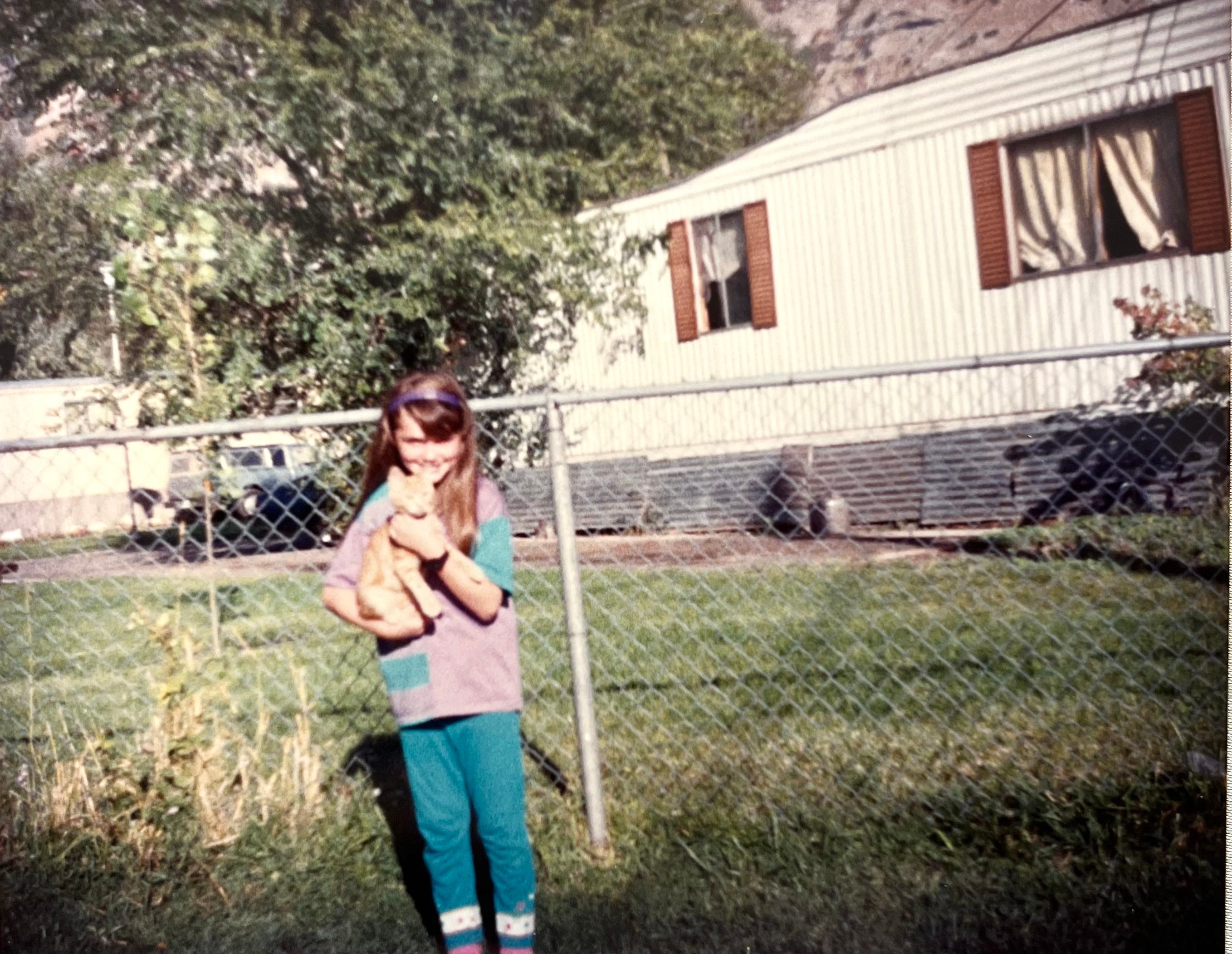
Review by Robert Ordway
Carrie Sheffield’s Motorhome Prophecies is the kind of book you don’t just read, you wrestle with it. It’s raw without being reckless, honest without being self-indulgent, and deeply personal in a way that forces you to confront your own assumptions about suffering, resilience, and what it actually means to be redeemed.
A fellow “Elder Millennial” (we grew up without smartphones), Sheffield takes us inside a childhood marked by instability, abuse, and spiritual confusion, but what makes this memoir remarkable isn’t just the darkness—it’s her refusal to either sanitize it or be defined by it. This is not trauma packaged for consumption. It’s testimony.
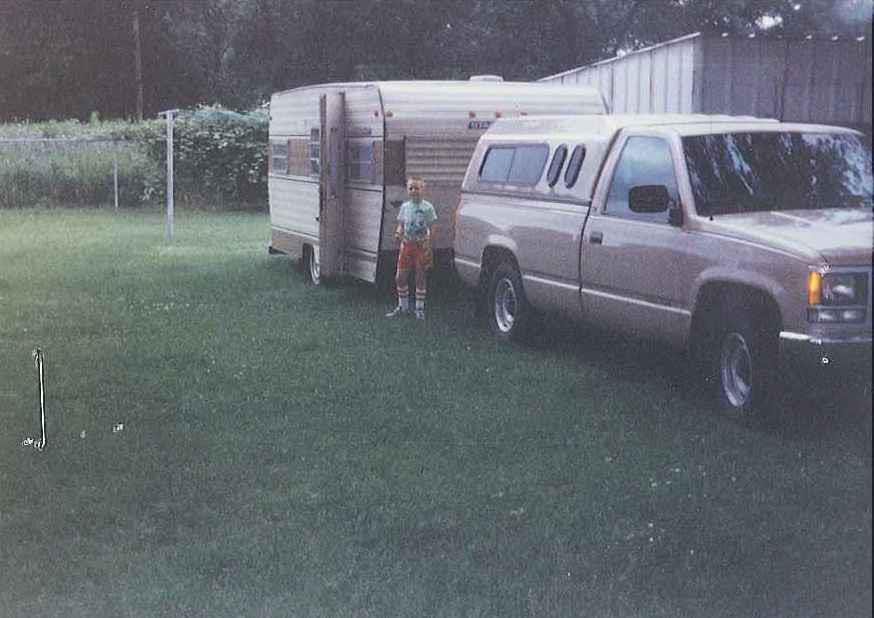
It’s not easy being the fifth of eight children, but even harder when your dad is a mentally ill, violent, street musician who thought he was a Mormon prophet. He made Carrie perform music with her proselytizing family on the streets as she went in and out of 17 public schools and homeschool, all while living out of a motorhome, sheds, and tents. Her stint at an inner-city urban school, where 90% of the students were black, adds a unique twist of culture to her lived experience as a “trailer park girl from Utah.” She reports multiple siblings have attempted suicide, and two brothers developed schizophrenia, suffering she believes is tied to their child abuse.
What struck me most is how American this story is, not in the easy, bumper-sticker sense, but in the deeper, harder truth: that where you start does not have to determine where you end. Sheffield’s journey is chaotic and nonlinear, but it bends toward hope.
And yet, hope here isn’t abstract. It’s anchored.
For me, that’s where this book hit home.
There’s a particular kind of grief that rearranges your life in ways you never quite recover from. Losing my father to ALS was one of those moments. Losing my mother to suicide was another. Those experiences don’t just leave scars—they leave questions about suffering and meaning and whether any of this can be redeemed.
What Sheffield understands, and what she articulates with clarity and restraint, is that faith is not an escape from those questions. It’s what allows you to survive, derive meaning and purpose from them, and even redeem them.
Throughout the book, Sheffield provides commentary on the Mormon faith, particularly of the fundamentalist variety, which drove many of her insecurities about what it means to be a woman and a Christian. I’ve mentioned the book When Your Best Isn’t Good Enough in previous writing, and I can relate when Sheffield mentions how “black or white perfectionism haunted her for decades” and how it led her to verbally abuse others and herself. (p.43)
We also both faced some level of estrangement from a parent, and when we did not follow their expected path, we were sent nastygrams (p174) about falling short, further blurring the need for acceptance while also understanding how distance can provide clarity in our pursuit of the truth. Vice President JD Vance cites a similar theme in Hillbilly Elegy (p.138) as recognizing the need to remove himself from the situation with his mother by choosing to live with his mamaw for three years.
When finally leaving the LDS faith, Sheffield hits the bottom with severe suicidal ideation, but she powered through by becoming a “career woman,” earning a master’s degree from Harvard, competing in a Miss USA-system state beauty pageant, and working at the elite financial firms of both Goldman Sachs and Moody’s.
Like many people today, as she fell away from faith, politics became her religion, but that all fades. As she studied science, history, anthropology, and other disciplines, her faith in God and Christianity grew. (p.255)
The book closes with a chapter about forgiving her dad and then wrestling with God. Today, she embraces the power of prayer, music, and gratitude as her weapons against depression, doubt, and fear.
Sheffield’s story ultimately becomes one of spiritual reorientation: away from a distorted understanding of God and toward a relationship with Christ that is both grounded and transformative. She strikes a balance of grace and truth. There’s no triumphalism here, just a movement toward healing and grace.
That resonates deeply with me. Because if I’m honest, it wasn’t professional success, intellectual clarity, or even community that pulled me out of my lowest moments. It was faith. Not perfectly lived, not always steady, but real. The kind that meets you in the dark and, over time, teaches you how to walk forward again.
That’s what Motorhome Prophecies offers.
Carrie’s memoir is not just about overcoming hardship. It’s a case for redemption, not as a cliché, but as a lived reality. Sheffield’s journey shows that suffering never disappears but can be transformed.
In a cultural moment that often oscillates between cynicism and self-absorption, this book cuts a different path. It insists that healing is possible and Truth matters. That faith, real, grounded, Christ-centered faith, can rebuild what feels irreparably broken.
For those seeking to be pulled out of isolation and liberated from the demons of their past, her message is one worth taking seriously.
 | A guest post by
|
Excellent